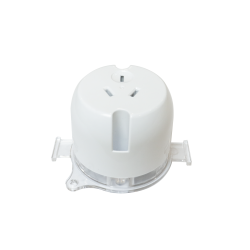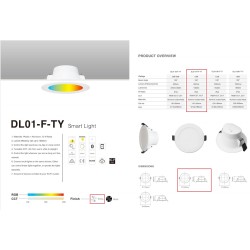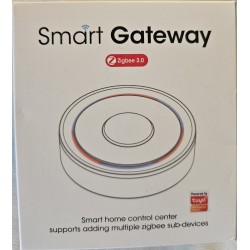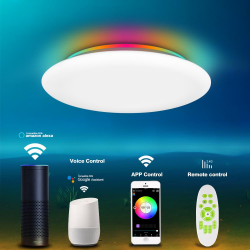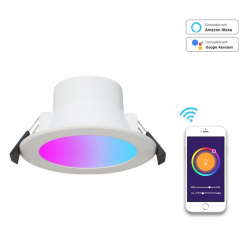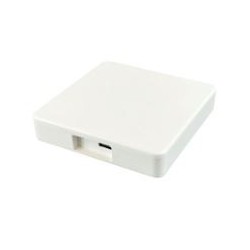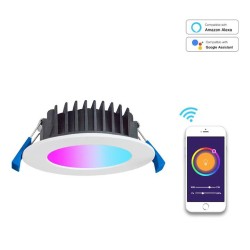


Description: Smart Downlight - 10W Aluminium + PBT Materials with NZ/AU Plug
Power: 10W
Input: AC220 - 240V, 50/60Hz
Driver: External driver
Lumens Output: 800 - 900 lm
LED: RGB colours and normal warm white colour 3000K, Normal white 4000K, Cool white 6000 as well. You can set/change which ever you want
Beam Angle: 120
CRI 82
Dimmable: Triac Dimmable with trailing edge
Certification: CE SAA IC-4 IC-F - AU & NZ Standard compactable
IC-F rated: insulation coverable
IP44 rated: bathroom safe, soffits safe, entrance safe
Size: Dia 108mm Height 40mm
Cutout Size: 90mm
Zigbee smart lights aren’t just “another wireless option”—they’re built very differently from Wi-Fi lights, and that gives them some clear advantages (especially as your setup grows).
Here are the key benefits of Zigbee over Wi-Fi smart lights:
👉 Result: more stable connections, especially in larger homes or with many lights.
By contrast, Wi-Fi uses a star network—every bulb talks directly to your router, so weak spots or interference can cause dropouts.
👉 Result:
Wi-Fi lights, on the other hand, add more devices directly to your router, which can slow things down at scale.
👉 Result:
Wi-Fi lights often rely on cloud services, which can introduce delays or stop working if the internet drops.
👉 Result:
Wi-Fi devices typically consume more power and often need constant mains power.
👉 Result:
With Wi-Fi, adding more devices can reduce performance due to router limits.
👉 Result:
Description: Smart Downlight - 10W Aluminium + PBT Materials with NZ/AU Plug
Power: 10W
Input: AC220 - 240V, 50/60Hz
Driver: External driver
Lumens Output: 800 - 900 lm
LED: RGB colours and normal warm white colour 3000K, Normal white 4000K, Cool white 6000 as well. You can set/change which ever you want
Beam Angle: 120
CRI 82
Dimmable: Triac Dimmable with trailing edge
Certification: CE SAA IC-4 IC-F - AU & NZ Standard compactable
IC-F rated: insulation coverable
IP44 rated: bathroom safe, soffits safe, entrance safe
Size: Dia 108mm Height 40mm
Cutout Size: 90mm